
A practical, realistic, doable response to the few who divide the many.
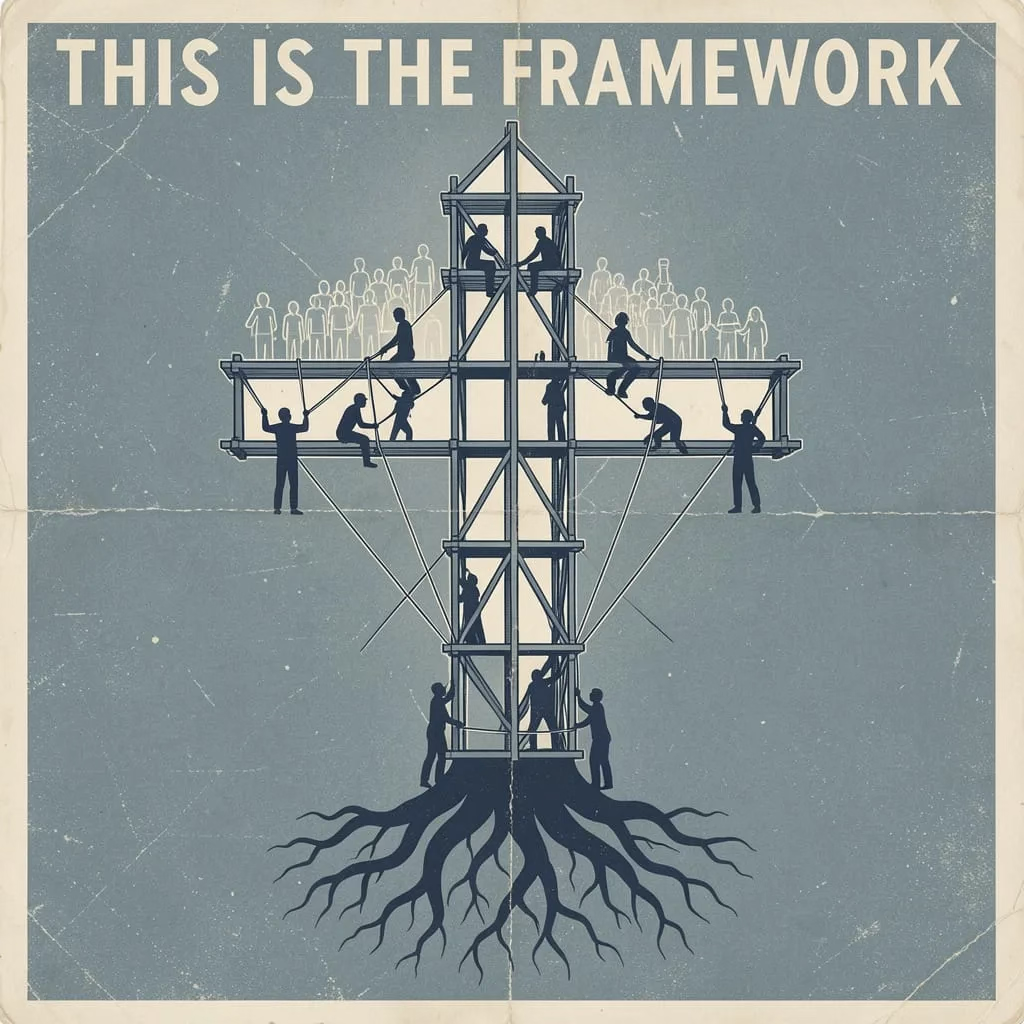
Luther was not an idealist. He was famously, almost stubbornly, realistic about human nature. He did not believe the world could be perfected. He believed it could be tended — the way a farmer tends a field that will always have weeds, the way a parent tends a child who will always disappoint and surprise.
That is exactly the temperament this moment requires.
The gun debate, as currently staged, is a theater of extremes — each side performing its convictions for an audience that grows more exhausted and more entrenched with every performance. But the Lutheran tradition offers something the culture war cannot: a framework for acting faithfully in a broken world without pretending the world is not broken.
First: Name the actual problem honestly
Lutheran theology begins with the Law — not as punishment, but as diagnosis. You cannot treat what you refuse to name. The honest diagnosis here is not “guns” and not “evil.” It is this: a small number of profoundly isolated, destabilized human beings are producing catastrophic harm, and the systems meant to identify and support them are failing.
The Law says: something is broken. The Gospel asks: where is the grace that can mend it? Lutheran theology refuses to stop at diagnosis. It insists on moving toward healing — not naively, but with open eyes.
Second: Reclaim the doctrine of vocation
Luther’s doctrine of vocation is radically democratic. Every person — the teacher, the neighbor, the gun shop owner, the school counselor, the pastor, the coach — is called to act faithfully in their station. No one waits for a hero. No one waits for Washington.
In practical terms, this means the majority does not have to choose sides in the culture war. It means asking instead: in my place, with my people, what can I do? The teacher who notices the isolated student. The gun owner who takes safe storage seriously. The pastor who builds the kind of community where no one falls through entirely. The legislator who funds mental health rather than performing outrage.
These are not dramatic acts. They are the unglamorous work of tending. Luther would recognize them immediately.
Third: Understand how violence actually grows
Every act of mass violence that shocks a nation was preceded by a long, quiet unraveling. A person losing connection after connection — to family, to community, to purpose, to dignity. By the time the act occurs, the web of relationships around that person has already failed in a dozen small, unremarkable ways.
This means the response cannot be primarily legislative, though legislation matters. It must be about relational infrastructure — the unglamorous, invisible work of keeping human beings connected to one another. The question is not only “how do we stop the shooter.” It is “where did the threads snap, and who was positioned to notice?”
The goal is not to surveil the unstable. It is to restore the connections that, when present, make catastrophic violence nearly impossible — and when absent, make it nearly inevitable.
Fourth: The practical, doable agenda
This is not a utopian program. It is a Lutheran one — local, achievable, grounded in vocation:
Congregations & communities
Build explicit ministries of belonging for isolated young men — the demographic most overrepresented among mass shooters. Not programs. Relationships. Showing up before the crisis, not after.
Gun owners
Lead on safe storage. Frame it as stewardship and responsibility — not concession to the other side. No unstable person should have frictionless access to a weapon. This is not politics. It is faithfulness.
Schools & educators
Fund counselors, not just drills. Stop training children to hide and start investing in the adults who can identify a child in crisis before the crisis becomes irreversible.
Legislators
Pass red flag laws with robust due process protections. This is not confiscation. It is the Law functioning as Luther intended — a restraint on harm while healing remains possible.
Media & all of us
Stop saying their names. Stop broadcasting the manifesto. The contagion of copycat violence is thoroughly documented. Every breathless cable segment is an invitation to the next unstable person watching alone in a dark room. Deprive the spectacle of its oxygen.
The majority already knows this
Here is the quiet, stubborn truth: most Americans — gun owners and non-owners alike, rural and urban, people of faith and people of none — already sense that this agenda is right. The polling consistently shows it. Red flag laws with due process: broadly supported. Safe storage: broadly supported. Mental health investment: broadly supported.
The majority is not the problem. The majority is the answer — if it can stop being distracted by the performance of division and start acting where it actually lives: in neighborhoods, congregations, schools, and families.
The culture war is loud. The work of tending is quiet. But it is the only work that has ever actually changed anything.