The Luminal Moment
Every tradition that has ever taken the sacred seriously has understood that certain objects require a threshold.
The Torah scroll is wrapped in cloth, bound, and returned to the ark. The altar is railed off from the nave. The medicine bundle is not left on the kitchen table. The prayer beads are kept in a specific pocket, touched in a specific way. These are not merely habits of tidiness. They are acts of consecration — the recognition that some things carry enough power that how we house them is itself a moral statement. The container is part of the meaning.
A loaded, unsecured firearm in a bedside drawer is also a theological statement. It says: this object requires no threshold. It is as available as a glass of water. Whatever power it holds, I have decided that convenience outweighs custody.
Most gun owners who store this way have never thought of it in those terms. They are thinking about speed — the two a.m. intruder, the seconds that matter. That instinct is understandable. It is also, the evidence is unambiguous, the instinct that kills the most people who were never supposed to die.
The research on safe storage is by now extensive and consistent. Homes where firearms are stored locked and unloaded have significantly lower rates of suicide, accidental death, and unauthorized use by children and adolescents. A landmark study found that safe storage practices could prevent up to a third of youth suicides by firearm and nearly half of all unintentional firearm deaths among children. These are not marginal gains. These are lives — specific, named, irreplaceable lives — that a lock and a few extra seconds stand between.
And yet more than half of all gun owners store at least one firearm unsafely. Nearly a quarter store all of their guns in an unlocked location. The gap between what gun owners know and what gun owners do is not primarily a knowledge gap. It is a spiritual gap — a failure of imagination about what their choice, in the specific geometry of their specific home, actually makes possible.
The question safe storage asks is not “do you trust yourself?” It asks: “do you trust every moment, every mood, every visitor, every curious child who will ever pass through this space?”
No honest person answers yes to that question.
Every tradition I know has a practice for the moment when human intention meets human limitation. In Judaism it is the concept of geder — building a fence around the law, creating protective distance between a person and the harm they might cause in a moment of weakness or inattention. You do not trust yourself to stand at the edge of the cliff and always choose wisely. You build the fence. The fence is not a confession of weakness. It is an act of wisdom so highly regarded it carries its own name.
In Islamic ethics, the principle of sadd al-dhara’i — blocking the means to harm — holds that it is not enough to intend good. We are obligated to remove, where we reasonably can, the pathways that lead to evil outcomes even when evil is not our intention. The unsecured gun is a pathway. Securing it is the obligation.
In Indigenous frameworks of relational responsibility, harm does not travel in straight lines from a single actor. It moves through the web of relationships that connect us — through households, through communities, through generations. The seventh-generation teaching does not ask only what we intend. It asks what we are setting in motion. An unsecured firearm is always setting something in motion.
And in the Christian tradition, the concept of stewardship has always extended beyond money and land. We are stewards of power. Every form of it. The question asked of the steward is not whether the power was given legitimately — it was. The question is what we did with it while it was in our hands.
Safe storage is not complicated. A biometric or combination lock box, kept near the bed for those who feel they need rapid access, costs between forty and one hundred dollars. A full gun safe costs more but is available through numerous assistance programs in most states. Trigger locks are inexpensive and widely available. Cable locks are often distributed free by law enforcement, pediatricians, and gun violence prevention organizations.
The technology is not the barrier. The theology is.
Because to lock the gun is to admit something. It is to admit that the home is not a perfectly controlled environment. That the people we love are not always in the states we imagine them to be. That our teenager, whom we know and trust, is also a human being moving through interior weather we cannot always see. That our own worst night — the night of the diagnosis, the bankruptcy, the marriage that finally breaks — is also a night when an available firearm changes the calculus of survival in ways we do not want to think about.
Safe storage asks us to protect our families not only from strangers, but from the worst moments that can visit any of us.
That is not a diminishment of love. It is love made rigorous. Love made honest. Love that looks at the full picture rather than the reassuring part of it.
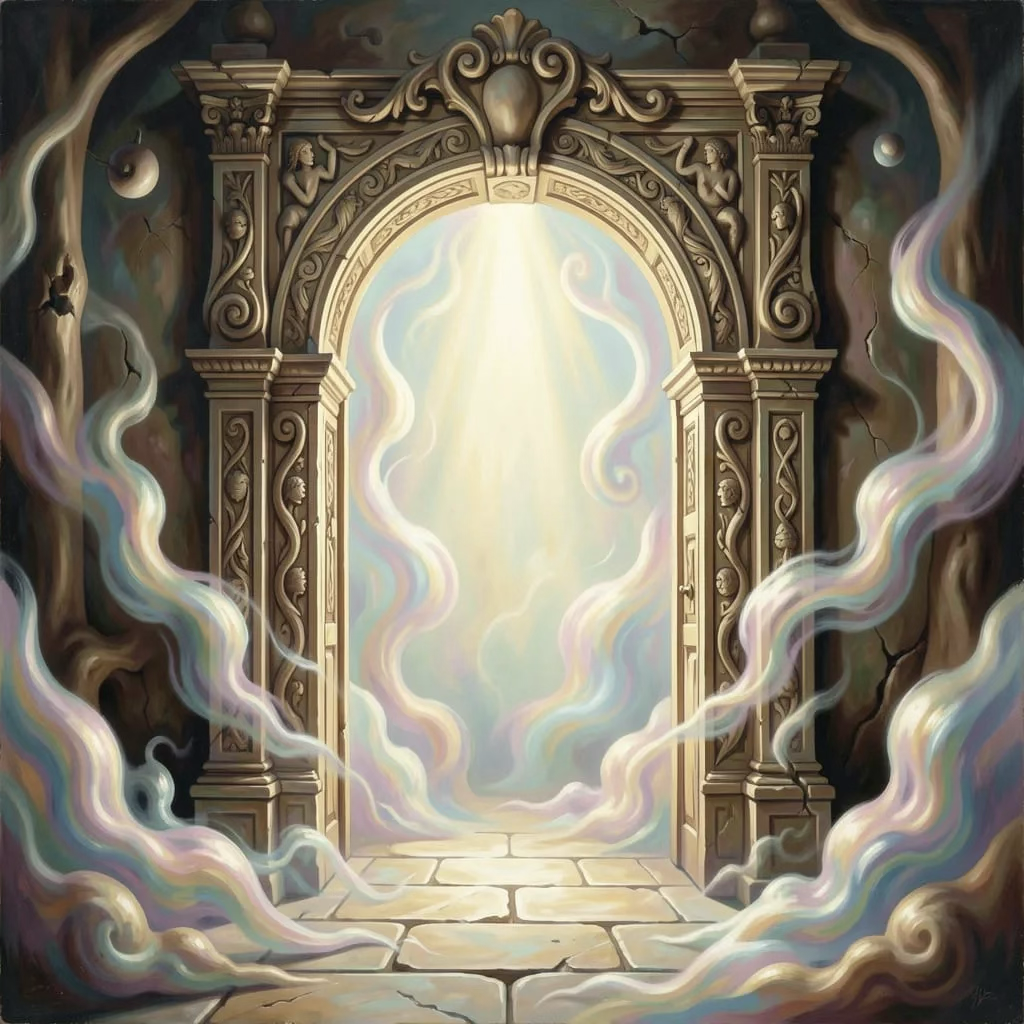
There is a moment in many faith traditions that scholars call the liminal threshold — the doorway between one state and another where special attention is required. The mezuzah is placed precisely there, at the doorpost, to mark that this crossing matters. Many traditions ask us to pause, to touch something, to remember where we are going and what we carry.
The gun safe, the lock box, the trigger lock — these are liminal objects. They stand between the firearm and the moment of irreversible consequence. They do not prevent all harm. Nothing does. But they slow the pathway. They insert a breath, a pause, a reconsideration. In that pause, lives are saved. Not hypothetical lives. Real ones, with names, in homes not unlike yours.
To lock the gun is to say: I take seriously what I am responsible for. I will not leave the outcome to chance, to a bad night, to a curious hand, to a moment I cannot foresee.
In the language of every tradition worth its name, that is called faithfulness.
And faithfulness, it turns out, is exactly what a gun lock looks like.